
Teaching in phases: a science teacher’s guide to the 5E model

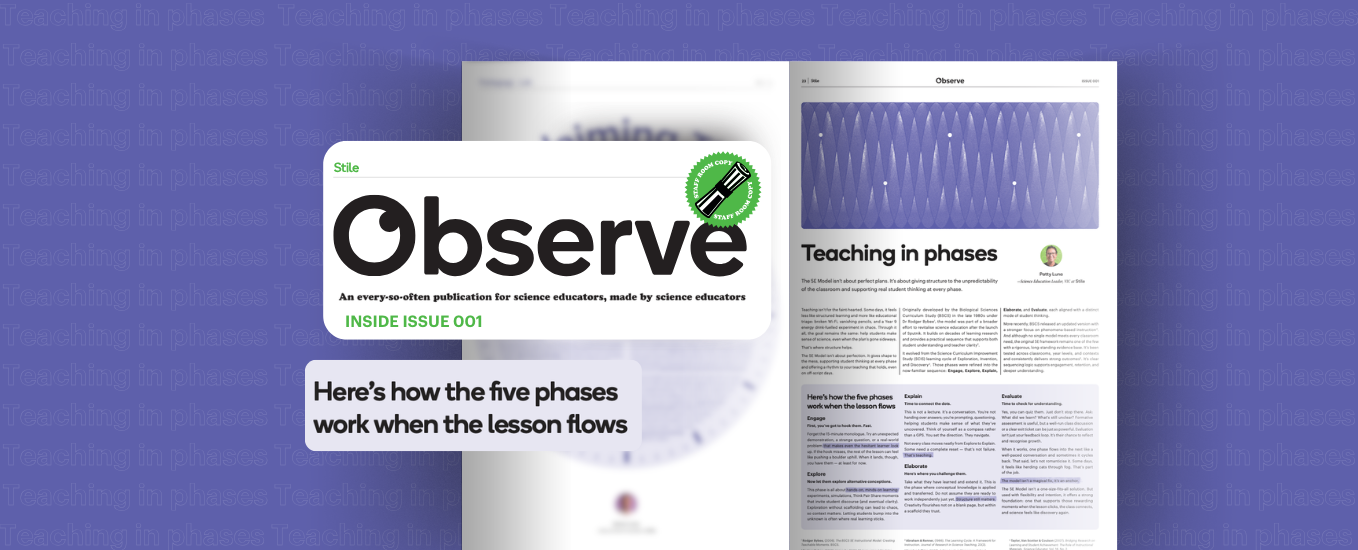
A flexible framework to bring more rhythm, clarity, and momentum to your lessons.
This article originally appeared in Observe, our every-so-often publication celebrating the craft and complexity of teaching science. In it, Stile’s Patty Luna sheds light on a flexible framework to bring rhythm, clarity, and momentum to your lessons.
The 5E Model isn’t about perfect plans. It’s about giving structure to the unpredictability of the classroom and supporting real student thinking at every phase.
Teaching isn’t for the faint-hearted. Some days, it feels less like structured learning and more like educational triage: broken Wi-Fi, vanishing pencils, and a Year 9 energy drink-fuelled experiment in chaos. Through it all, the goal remains the same: help students make sense of science, even when the plan’s gone sideways.
That’s where structure helps.
The 5E Model isn’t about perfection. It gives shape to the mess, supporting student thinking at every phase and offering a rhythm to your teaching that holds, even on off-script days.
Originally developed by the Biological Sciences Curriculum Study (BSCS) in the late 1980s under Dr Rodger Bybee¹, the model was part of a broader effort to revitalise science education after the launch of Sputnik. It builds on decades of learning research and provides a practical sequence that supports both student understanding and teacher clarity².
It evolved from the Science Curriculum Improvement Study (SCIS) learning cycle of Exploration, Invention, and Discovery³. Those phases were refined into the now-familiar sequence: Engage, Explore, Explain, Elaborate, and Evaluate, each aligned with a distinct mode of student thinking.
More recently, BSCS released an updated version with a stronger focus on phenomena-based instruction⁴. And although no single model meets every classroom need, the original 5E framework remains one of the few with a rigorous, long-standing evidence base. It’s been tested across classrooms, year levels, and contexts and consistently delivers strong outcomes⁵. Its clear sequencing logic supports engagement, retention, and deeper understanding.
Here’s how the five phases work when the lesson flows.
Engage: First, you’ve got to hook them. Fast.
Forget the 15-minute monologue. Try an unexpected demonstration, a strange question, or a real-world problem that makes even the hesitant learner look up. If the hook misses, the rest of the lesson can feel like pushing a boulder uphill. When it lands, though, you have them — at least for now.
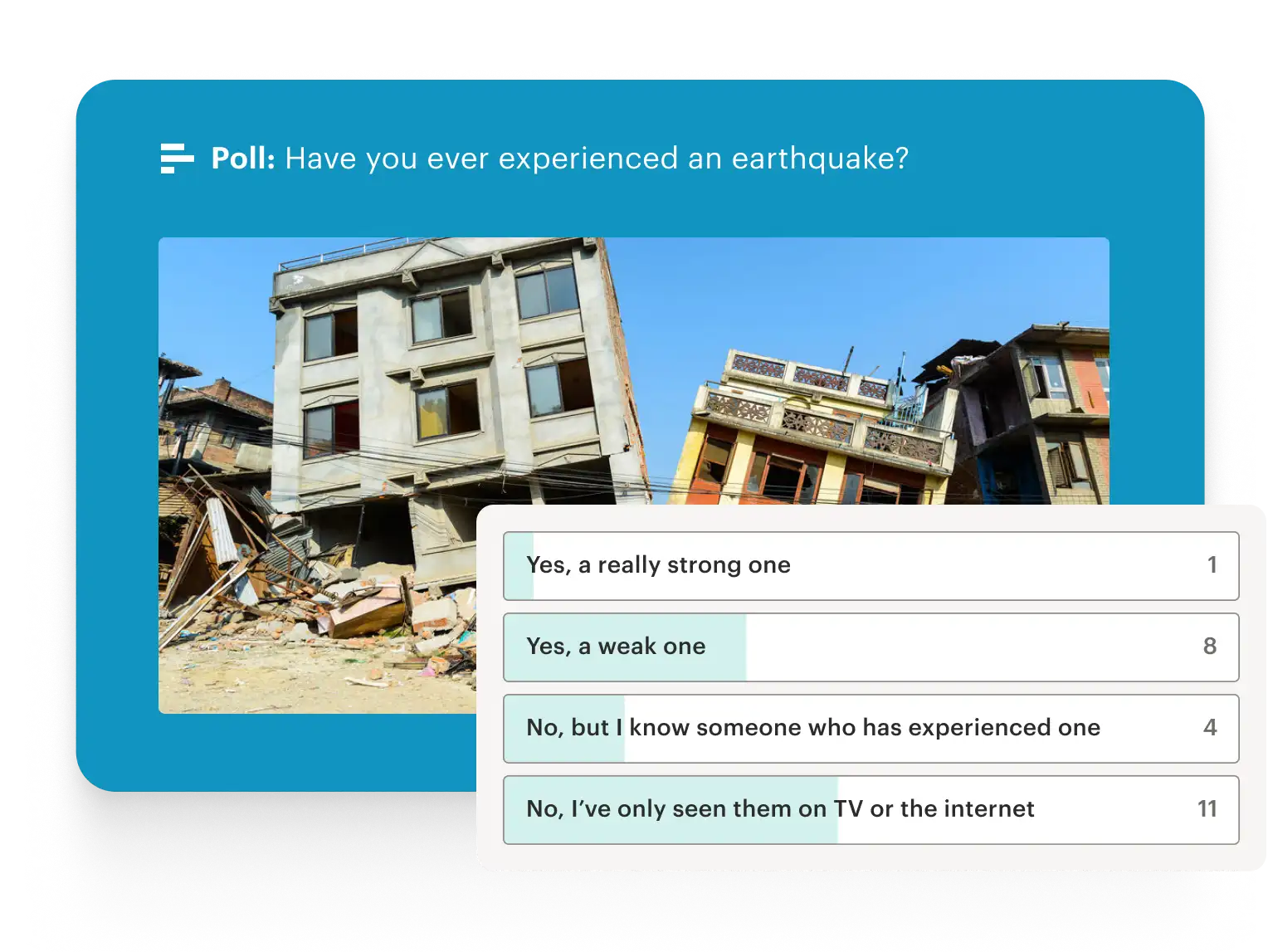
Explore: Now let them explore alternative conceptions.
This phase is all about hands-on, minds-on learning: experiments, simulations, Think Pair Share moments that invite student discourse (and eventual clarity). Exploration without scaffolding can lead to chaos, so context matters. Letting students bump into the unknown is often where real learning sticks.
This is not a lecture. It’s a conversation. You’re not handing over answers; you’re prompting, questioning, helping students make sense of what they’ve uncovered. Think of yourself as a compass rather than a GPS. You set the direction. They navigate.
Explain: Time to connect the dots.
This is not a lecture. It’s a conversation. You’re not handing over answers; you’re prompting, questioning, helping students make sense of what they’ve uncovered. Think of yourself as a compass rather than a GPS. You set the direction. They navigate.
Elaborate: Here’s where you challenge them.
Take what they have learned and extend it. This is the phase where conceptual knowledge is applied and transferred. Do not assume they are ready to work independently just yet. Structure still matters. Creativity flourishes not on a blank page, but within a scaffold they trust.
Evaluate: Time to check for understanding.
Yes, you can quiz them. Just don’t stop there. Ask: What did we learn? What’s still unclear? Formative assessment is useful, but a well-run class discussion or a clear exit ticket can be just as powerful. Evaluation isn’t just your feedback loop. It’s their chance to reflect and recognise growth.
When it works, one phase flows into the next like a well-paced conversation and sometimes it cycles back. That said, let’s not romanticise it. Some days, it feels like herding cats through fog. That’s part of the job.
While the 5E Model isn’t a one-size-fits-all solution. When used with flexibility and intention, it offers a strong foundation: one that supports those rewarding moments when the lesson clicks, the class connects, and science feels like discovery again.
See how Stile integrates the 5E Instructional Model in science lessons
Stile education integrates evidence-based pedagogy within every lesson to support student outcomes.
References
- Rodger Bybee (2006). The BSCS 5E Instructional Model: Creating Teachable Moments. BSCS.
- Rodger Bybee (2019). Using the BSCS 5E Instructional Model to Introduce STEM Disciplines. Science and Children, Vol. 56, No. 6.
- Abraham & Renner (1986). The Learning Cycle: A Framework for Instruction. Journal of Research in Science Teaching, 23(3).
- Karplus & Thier (1967). A New Look at Elementary School Science. Rand McNally.
- Taylor, Van Scotter & Coulson (2007). Bridging Research on Learning and Student Achievement: The Role of Instructional Materials. Science Educator, Vol. 16, No. 2.