The key that unlocks teaching freedom
A knowledge-rich curriculum is the foundation that teachers bring to life through curriculum literacy.

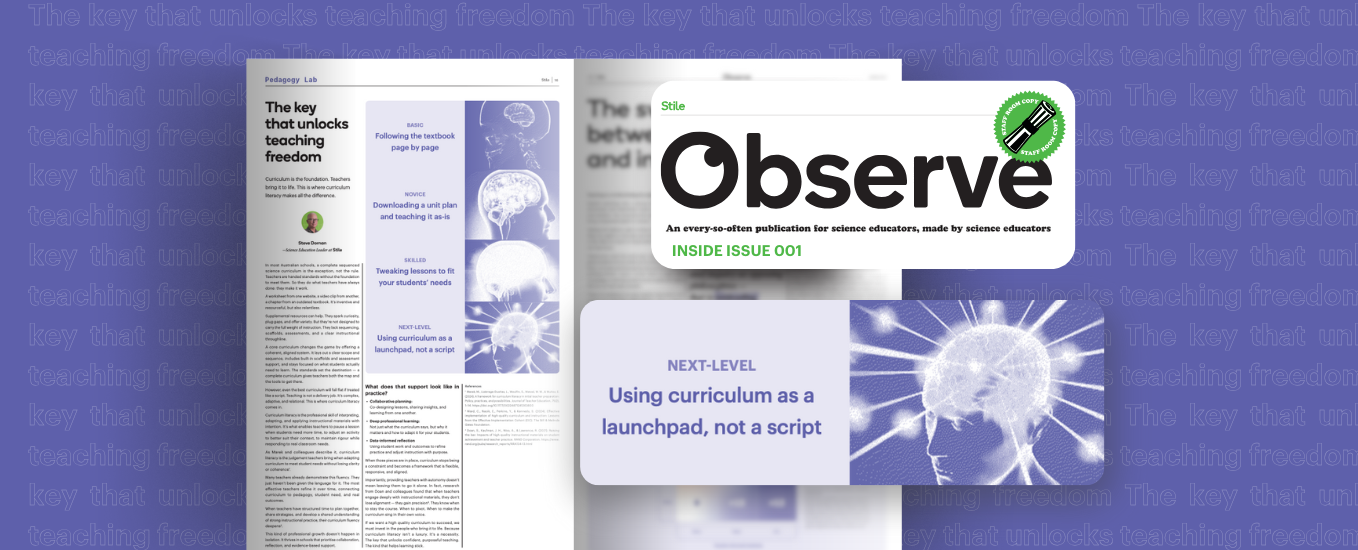
This article originally appeared in Observe, our every-so-often publication celebrating the craft and complexity of teaching science. In it, Stile’s Steve Dornan tells us why curriculum literacy makes all the difference.
Teaching is dynamic, unpredictable, and deeply human.
In most Australian schools, a complete sequenced science curriculum is the exception, not the rule. Teachers are handed standards without the foundation to meet them. So they do what teachers have always done: they make it work.
A worksheet from one website, a video clip from another, a chapter from an outdated textbook. It’s inventive and resourceful, but also relentless.
Supplemental resources can help. They spark curiosity, plug gaps, and offer variety. But they’re not designed to carry the full weight of instruction. They lack sequencing, scaffolds, assessments, and a clear instructional throughline.
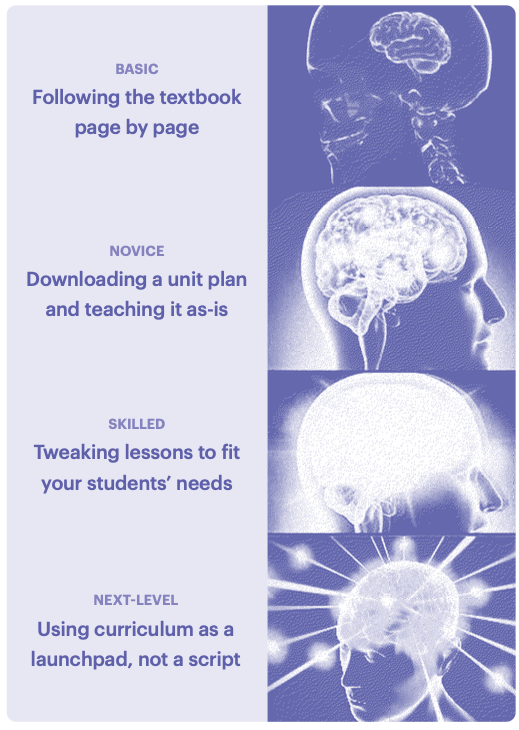
Implementing a complete core program to deliver the curriculum changes the game by offering a coherent, aligned system. It lays out a clear scope and sequence, includes built-in scaffolds and assessment support, and stays focused on what students actually need to learn. The standards set the destination — a complete curriculum gives teachers both the map and the tools to get there.
However, even the best curriculum will fall flat if treated like a script. Teaching is not a delivery job. It’s complex, adaptive, and relational. This is where curriculum literacy comes in.
Curriculum literacy is the professional skill of interpreting, adapting, and applying instructional materials with intention. It’s what enables teachers to pause a lesson when students need more time, to adjust an activity to better suit their context, to maintain rigour while responding to real classroom needs.
As Marek and colleagues describe it, curriculum literacy is the judgement teachers bring when adapting curriculum to meet student needs without losing clarity or coherence¹.
Many teachers already demonstrate this fluency. They just haven’t been given the language for it. The most effective teachers refine it over time, connecting curriculum to pedagogy, student needs, and real outcomes.
When teachers have structured time to plan together, share strategies, and develop a shared understanding of strong instructional practice, their curriculum fluency deepens².
This kind of professional growth doesn’t happen in isolation. It thrives in schools that prioritise collaboration, reflection, and evidence-based support.
What does that support look like in practice?
- Collaborative planning: Co-designing lessons, sharing insights, and learning from one another.
- Deep professional learning: Not just what the curriculum says, but why it matters and how to adapt it for your students.
- Data-informed reflection: Using student work and outcomes to refine practice and adjust instruction with purpose.
When those pieces are in place, the curriculum stops being a constraint and becomes a framework that is flexible, responsive, and aligned.
Importantly, providing teachers with autonomy doesn’t mean leaving them to go it alone. In fact, research from Doan and colleagues found that when teachers engage deeply with instructional materials, they don’t lose alignment; they gain precision³. They know when to stay the course. When to pivot. When to make the curriculum sing in its own voice.
If we want a knowledge-rich curriculum to succeed, we must support and invest in the teachers who bring it to life. Because curriculum literacy isn’t a luxury. It’s a necessity. The key that unlocks confident, purposeful teaching that helps learning stick.
References
- Marek, M., Lizárraga-Dueñas, L., Woulfin, S., Wetzel, M. M., & Muñoz, E. (2024). A framework for curriculum literacy in initial teacher preparation: Policy, practices, and possibilities. Journal of Teacher Education, 75(2), 1–14.
- Ward, C., Nacik, E., Perkins, Y., & Kennedy, S. (2024). Effective implementation of high-quality curriculum and instruction: Lessons from the Effective Implementation Cohort (EIC). The Bill & Melinda Gates Foundation.
- Doan, S., Kaufman, J. H., Woo, A., & Lawrence, R. (2021). Raising the bar: Impacts of high-quality instructional materials on student achievement and teacher practice. RAND Corporation.