
Start with the learning: Purposeful use of technology in the science classroom
Strong lessons start with what students need to learn, then pick the best way to get there: a debate, mini-whiteboard answers, a model, a simulation or an interactive question. Here are seven ways to plan with purpose.

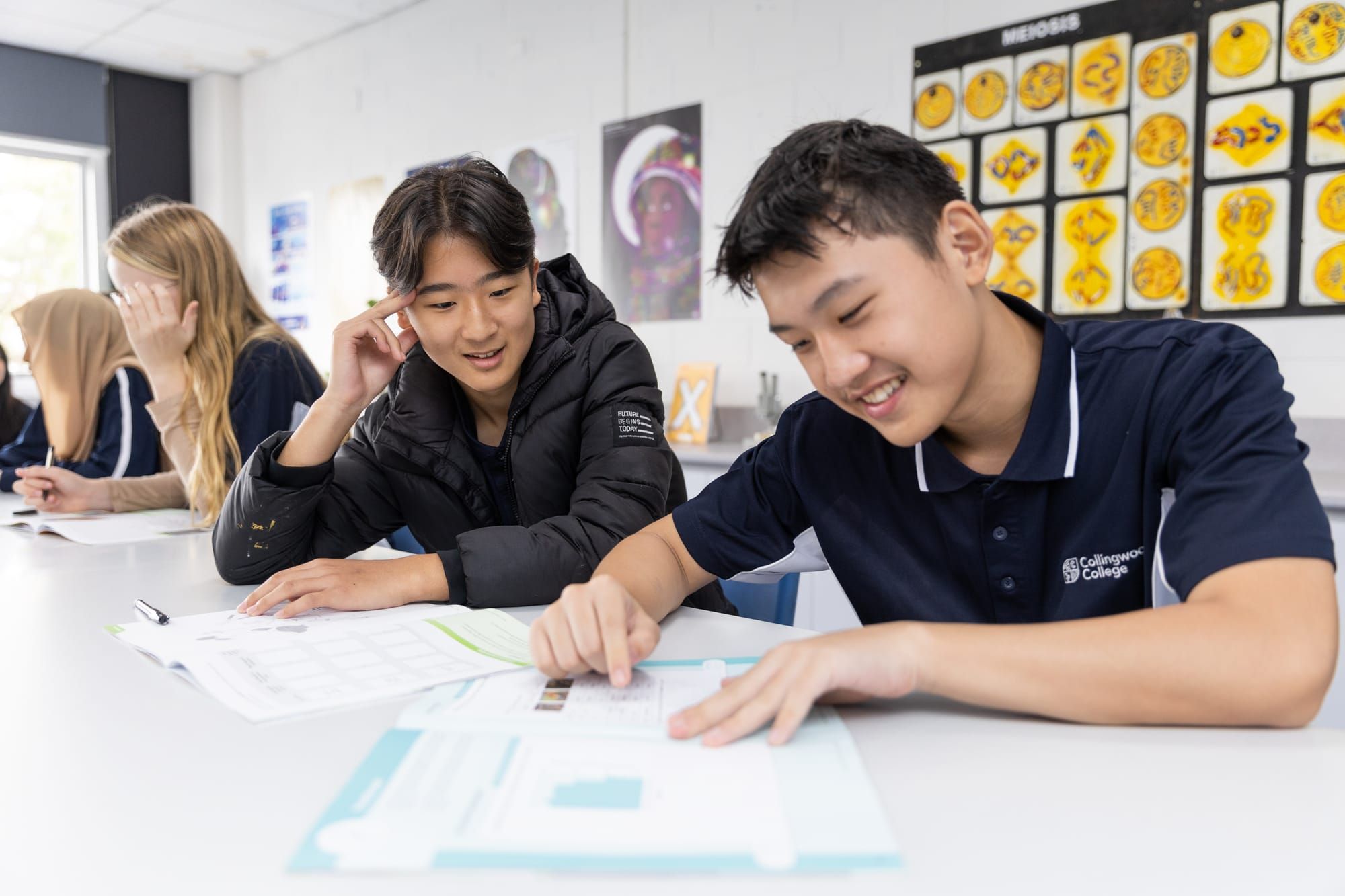
By Chloe Marie, Professional Learning Leader
We spend a lot of time thinking about how students learn science best. Some of the best lessons I've seen taught with Stile had students debating a hot science topic, sketching on whiteboards, building models and getting messy. Others had students exploring a virtual ecosystem or running a simulation they could never set up at a bench.
Previously, I'd have described the goal as balance: some screen, some paper, keep the ratio sensible. Now I ask myself what I want students to be able to do by the end of the lesson, and which approach will be most effective in getting them there.
Here are seven ways to make deliberate choices about how students learn, whether that's on paper, on their feet, in conversation or on a device.
Seven ways to choose with purpose
Each of these strategies starts with the intended learning, then picks the tool to match. They work with any Stile lesson.
1. Print the lesson (yes, really)
Giving students a copy of the printed lesson handout means they can follow along on paper while you project the lesson at the front of the room. They’re able to read and annotate text, and handwrite their responses while you use the lesson up front to support explicit instruction. You might choose paper for part of a lesson or all of it!
2. Start with a ‘Do Now’
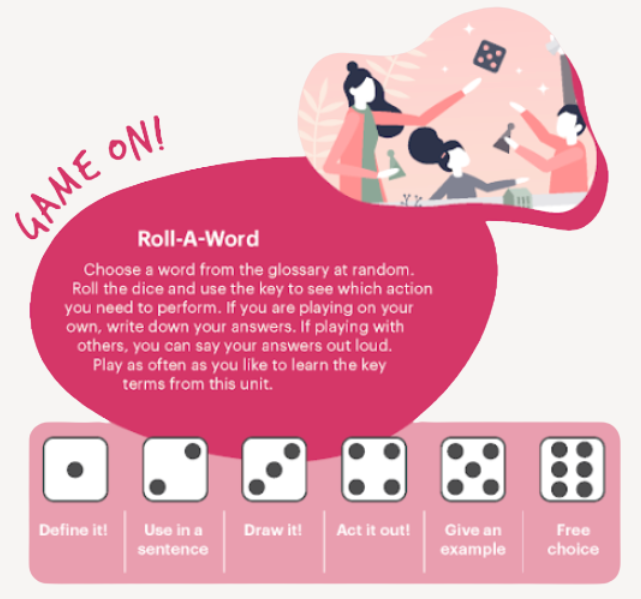
Glossary Games are a fast, screen-free way to warm up by focusing on key vocabulary. You’ll find plenty of ideas in Stile’s revision materials, like “Roll-A-Word” shown below. There are also regular ‘Do Now’ activities throughout Stile lessons.
2. Try a Whiteboard Wipeout
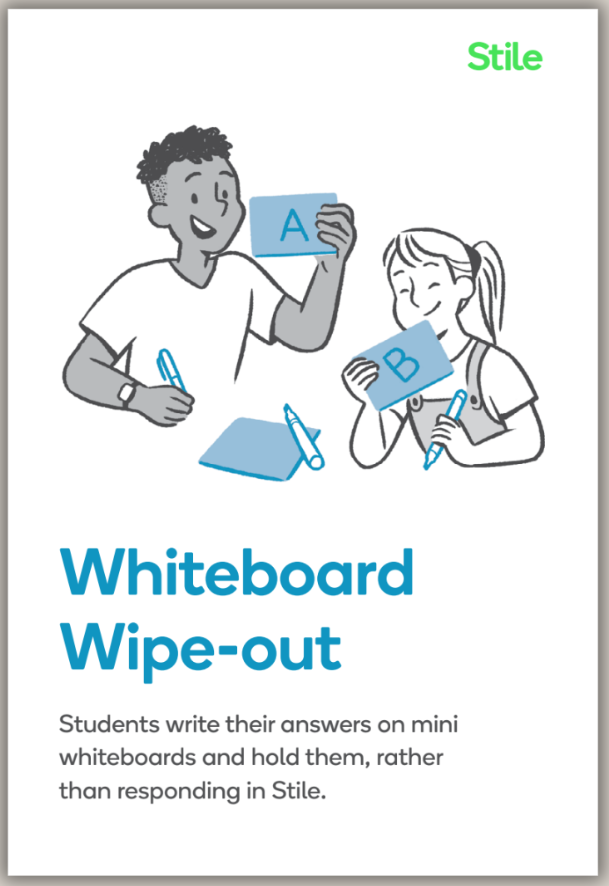
Get instant formative feedback by having students write their answers on mini whiteboards. This is a great substitute for a digital multi-choice question. Present the question up front, have students record the letter corresponding to their answer on their whiteboard, and hold it up for you to see. It’s engaging, visible, and low-pressure—an excellent option for retrieval practice (Mayer, 2021).
3. Make movement part of the task
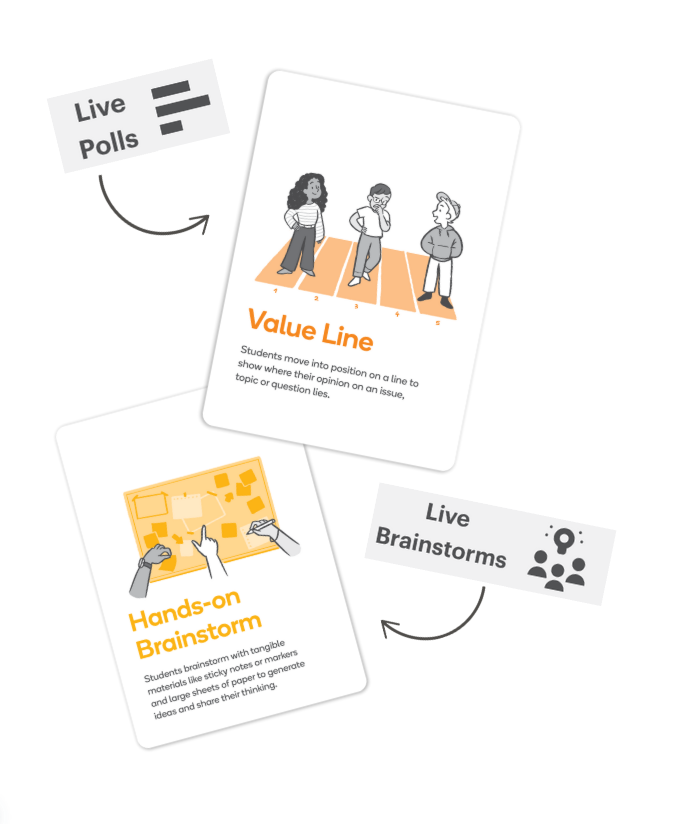
Use strategies like Four Corners or a Value Line to physically position students based on their opinion or answer choice. This isn’t fluff—it’s active learning that prompts metacognition and improves student achievement (Ceylan & Elitok Kesici, 2017).
4. Swap digital polls for hands-on brainstorms
A Live Poll in Stile can give quieter students an opportunity to share their ideas. Turning that same question into a Hands-on Brainstorm with sticky notes or markers can encourage richer responses.
6. Use Stile X workbooks
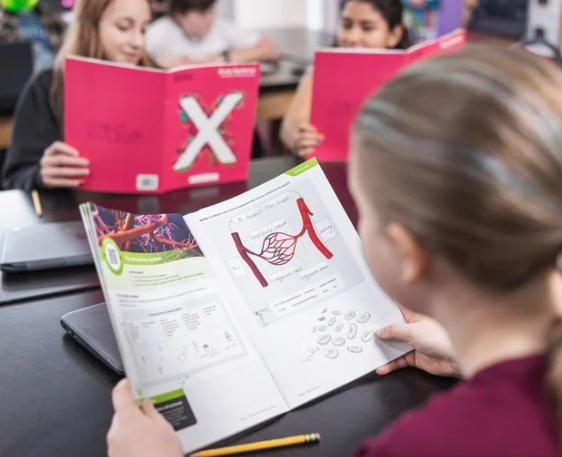
Skip the screen and bring Stile X into your lessons. Stile X is designed for off-screen consolidation and revision, supporting students with structured note-taking. Drawing, annotating, and mapping ideas by hand remains one of the most effective ways for students to process and consolidate complex concepts (Mayer, 2021).
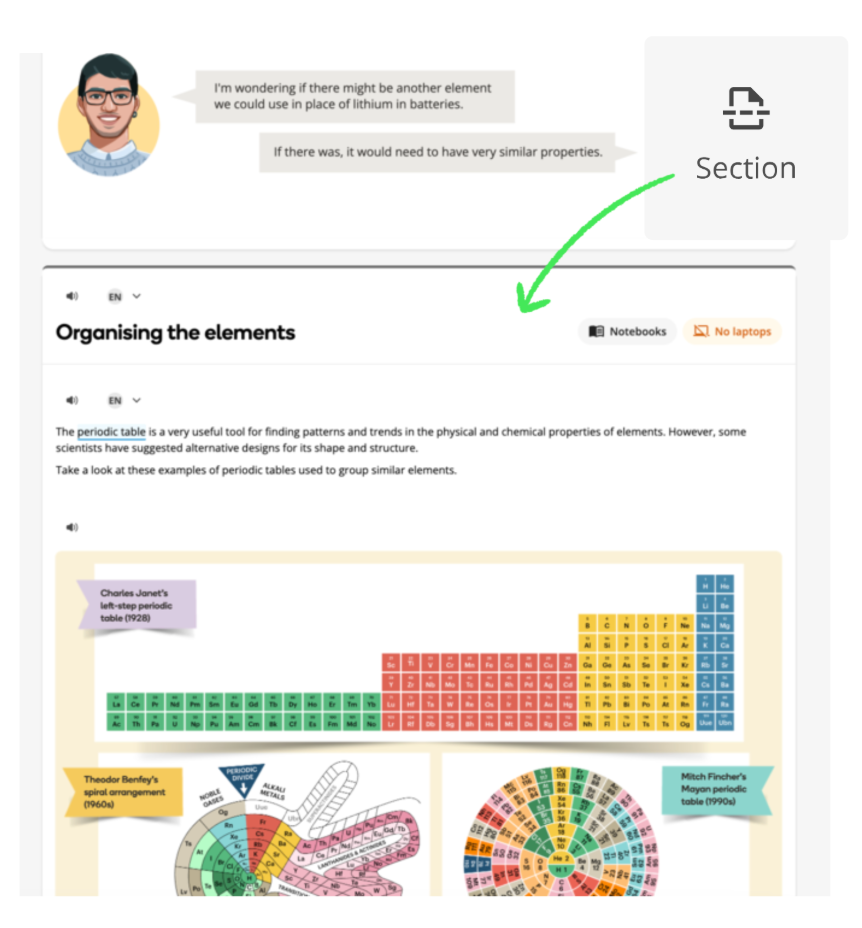
7. Build transitions into your lesson using Sections
The Sections tool lets you clearly label when devices should be open – or closed. Planning transitions this way reduces disruption and sets clear expectations.
Pick with purpose
A large review of forty years of research found that technology's average effect on learning was modest, ranging from small to moderate, with a lot of variation from study to study (Tamim et al., 2011). I find the variation more telling than the average. In my experience, what students are asked to do matters far more than whether they're doing it on a screen or on paper.
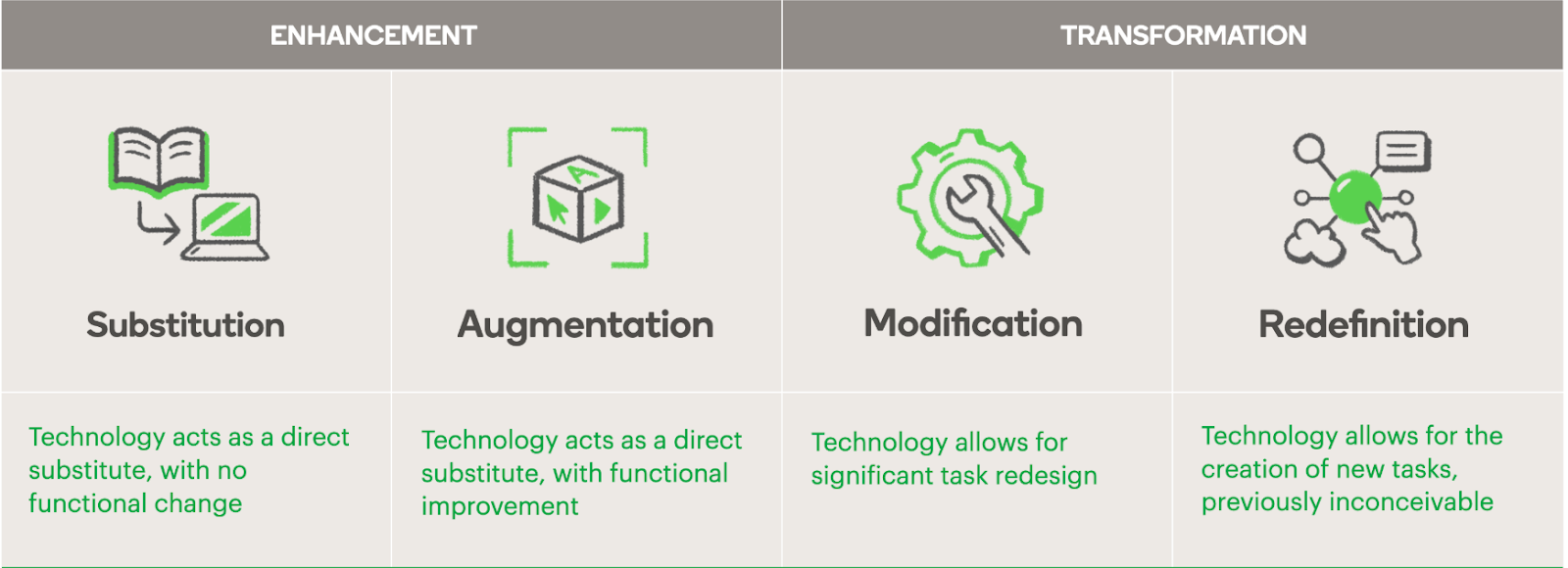
The SAMR model (Substitution, Augmentation, Modification, Redefinition) is a handy prompt when you're deciding (Puentedura, 2010). It asks whether a tool is simply replacing something you'd do anyway or changing what's possible. I'd use it with one caution: researchers have pointed out that SAMR is easy to read as a ladder to climb, and that it says little about context or the learning process (Hamilton et al., 2016). Substitution isn't a failure if substitution is what the learning goal requires. Sometimes the most effective choice is simply a pen and paper.
So when you plan, start with the outcome. Then choose what will get your students there.
Want more?
Our ‘Balancing screen-free and digital learning’ module in Stile Academy is packed with practical strategies and classroom illustrations. Plus, our Engagement Strategies Toolkit is available soon in Prepare Mode with over 20 flexible, low-prep ways to get students thinking.
References
- Agarwal, P. K., Nunes, L. D., & Blunt, J. R. (2021). Retrieval practice consistently benefits student learning: A systematic review of applied research in schools and classrooms. Educational Psychology Review, 33, 1409–1453. https://doi.org/10.1007/s10648-021-09595-9
- Delgado, P., Vargas, C., Ackerman, R., & Salmerón, L. (2018). Don't throw away your printed books: A meta-analysis on the effects of reading media on reading comprehension. Educational Research Review, 25, 23–38. https://doi.org/10.1016/j.edurev.2018.09.003
- Fiorella, L., & Zhang, Q. (2018). Drawing boundary conditions for learning by drawing. Educational Psychology Review, 30(3), 1115–1137.
- Freeman, S., Eddy, S. L., McDonough, M., Smith, M. K., Okoroafor, N., Jordt, H., & Wenderoth, M. P. (2014). Active learning increases student performance in science, engineering, and mathematics. Proceedings of the National Academy of Sciences, 111(23), 8410–8415. https://doi.org/10.1073/pnas.1319030111
- Hamilton, E. R., Rosenberg, J. M., & Akcaoglu, M. (2016). The Substitution Augmentation Modification Redefinition (SAMR) model: A critical review and suggestions for its use. TechTrends, 60(5), 433–441. https://doi.org/10.1007/s11528-016-0091-y
- Marano, G., Kotzalidis, G. D., Lisci, F. M., et al. (2025). The neuroscience behind writing: Handwriting vs. typing—who wins the battle? Life, 15(3), 345. https://doi.org/10.3390/life15030345
- Puentedura, R. (2010). SAMR and TPCK: Intro to advanced practice [Presentation].
- Tamim, R. M., Bernard, R. M., Borokhovski, E., Abrami, P. C., & Schmid, R. F. (2011). What forty years of research says about the impact of technology on learning: A second-order meta-analysis and validation study. Review of Educational Research, 81(1), 4–28. https://doi.org/10.3102/0034654310393361